Soundscapes inspired by Wyndham Lewis’s dark fantasy trilogy “The Human Age”.
The books “Childermass”, “Monstre Gai” and “Malign Fiesta” comprise an unfinished work, because Wyndham Lewis died before he could write the final novel in the series, which was to be called “The Trial of Man”.
Structure
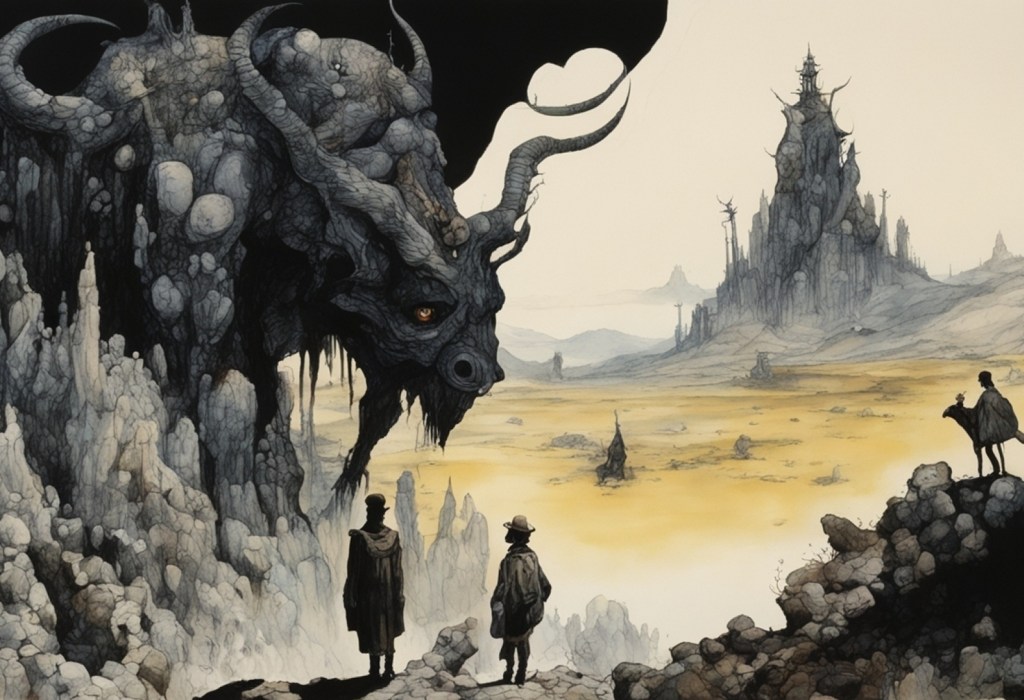
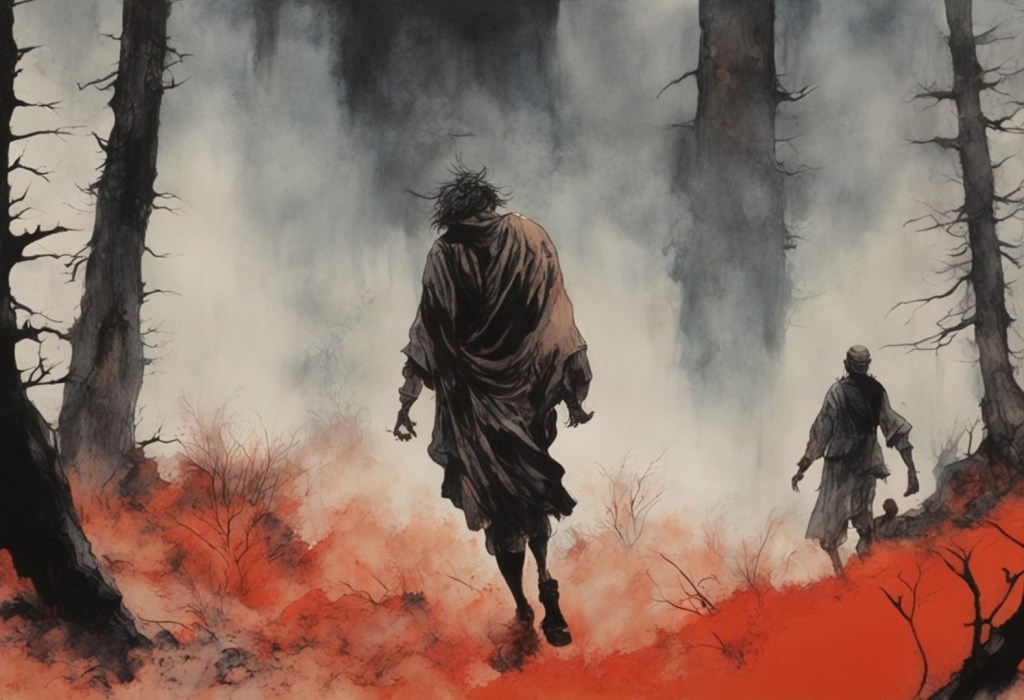
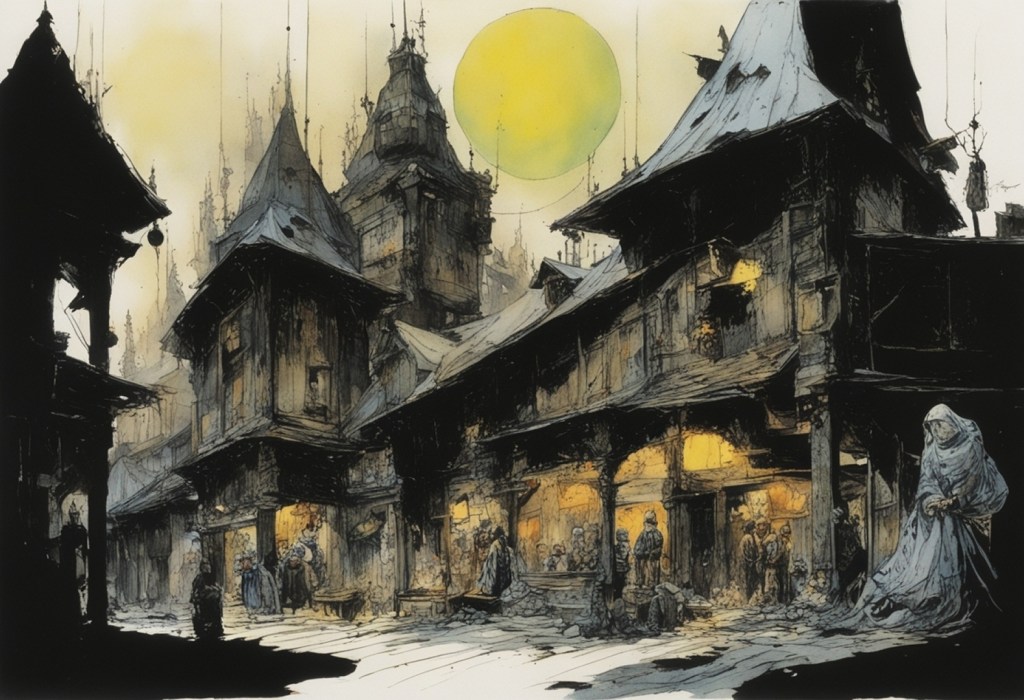
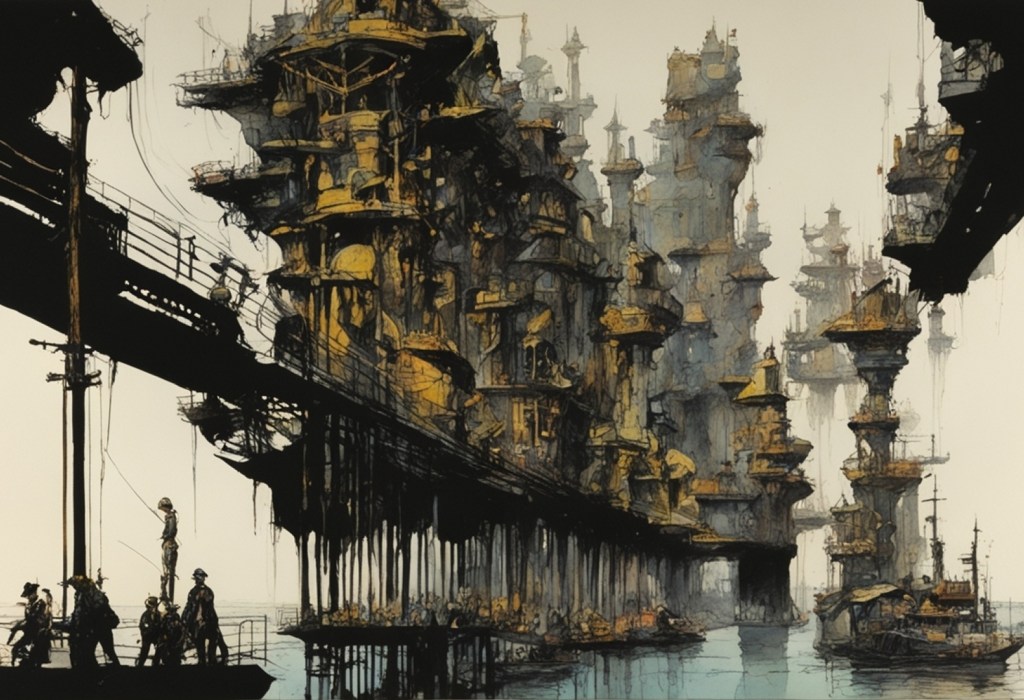
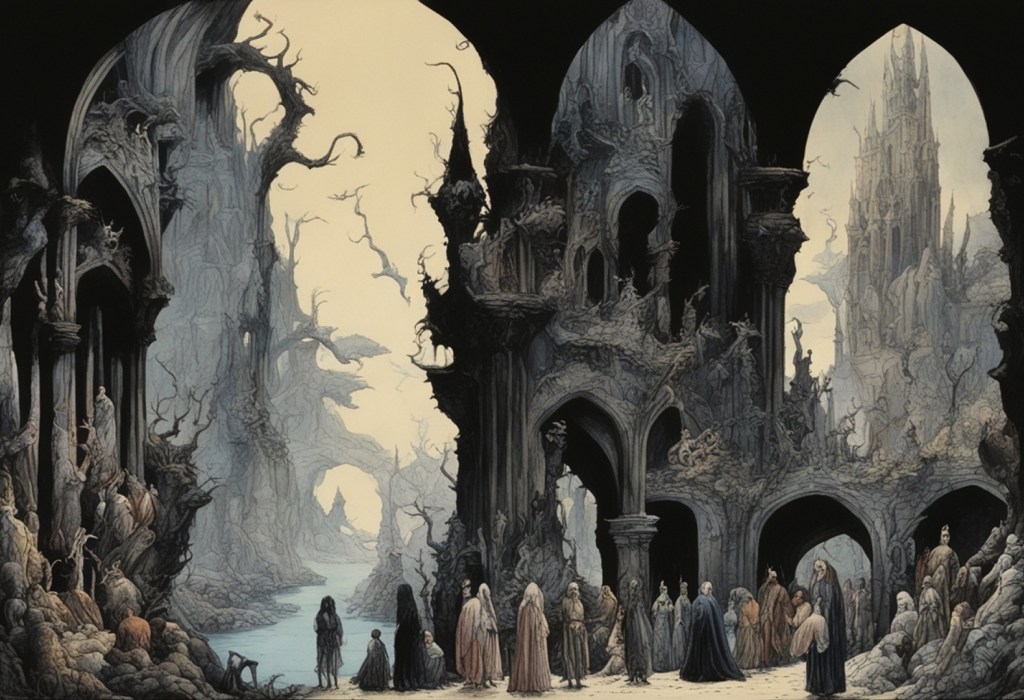
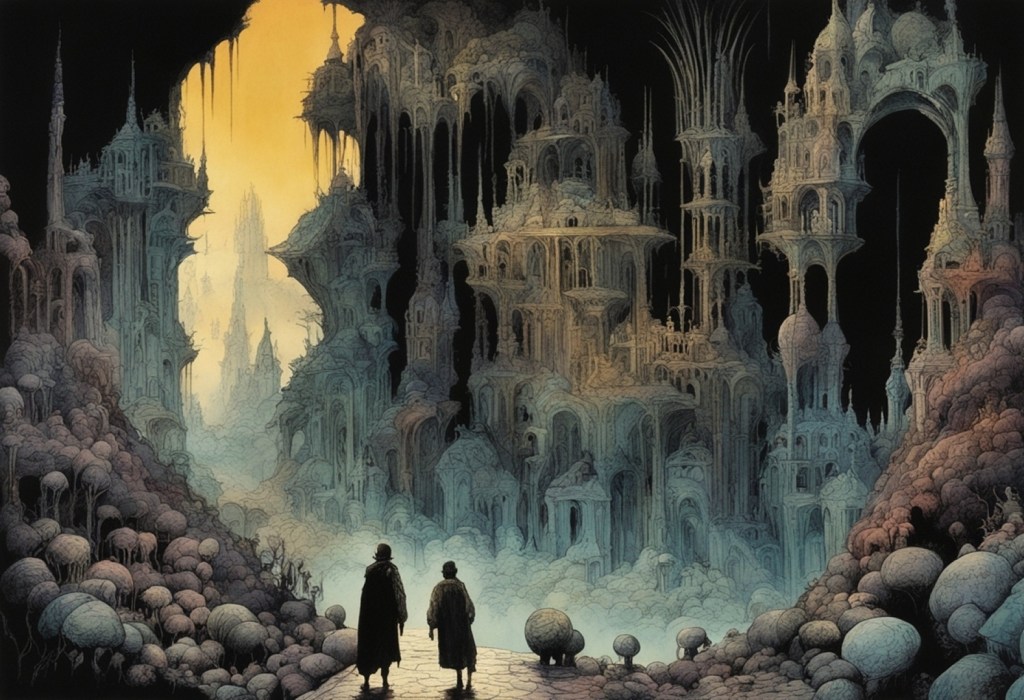
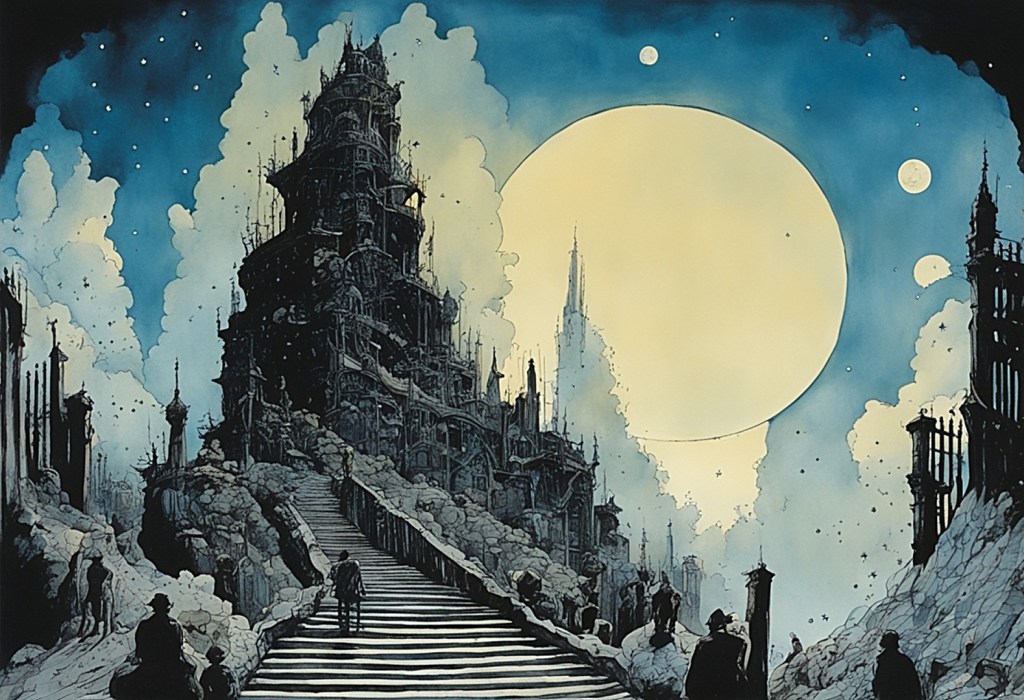
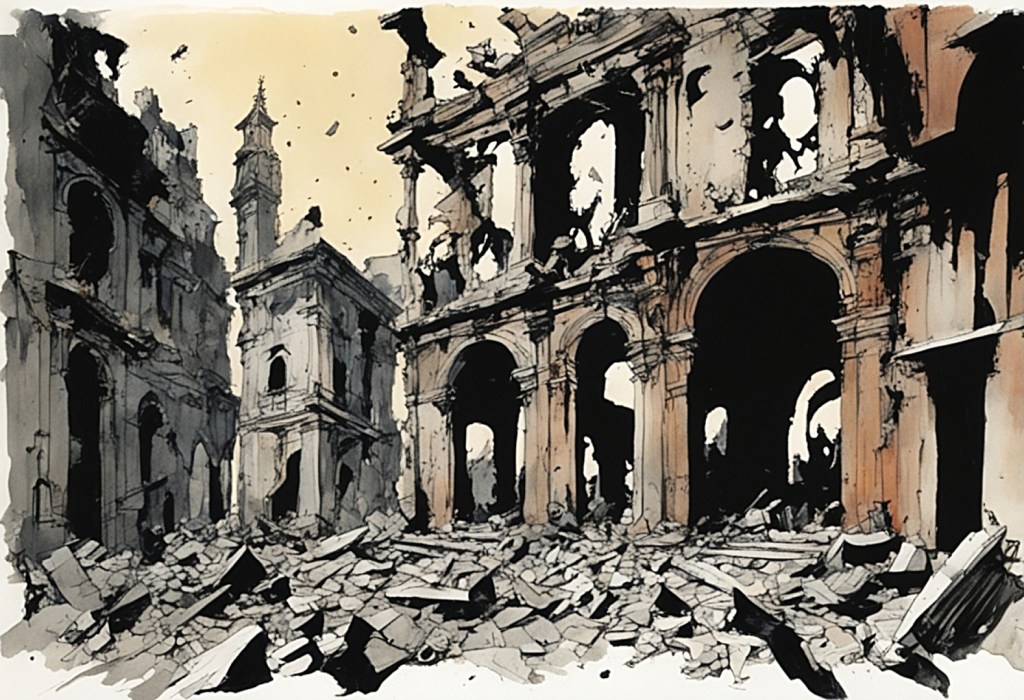
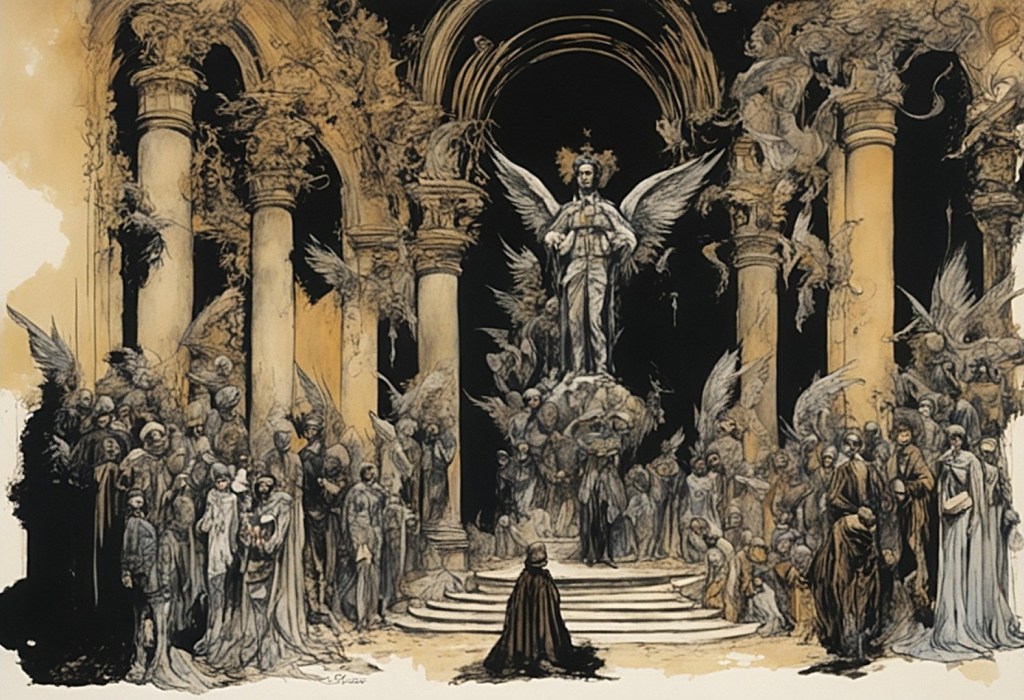
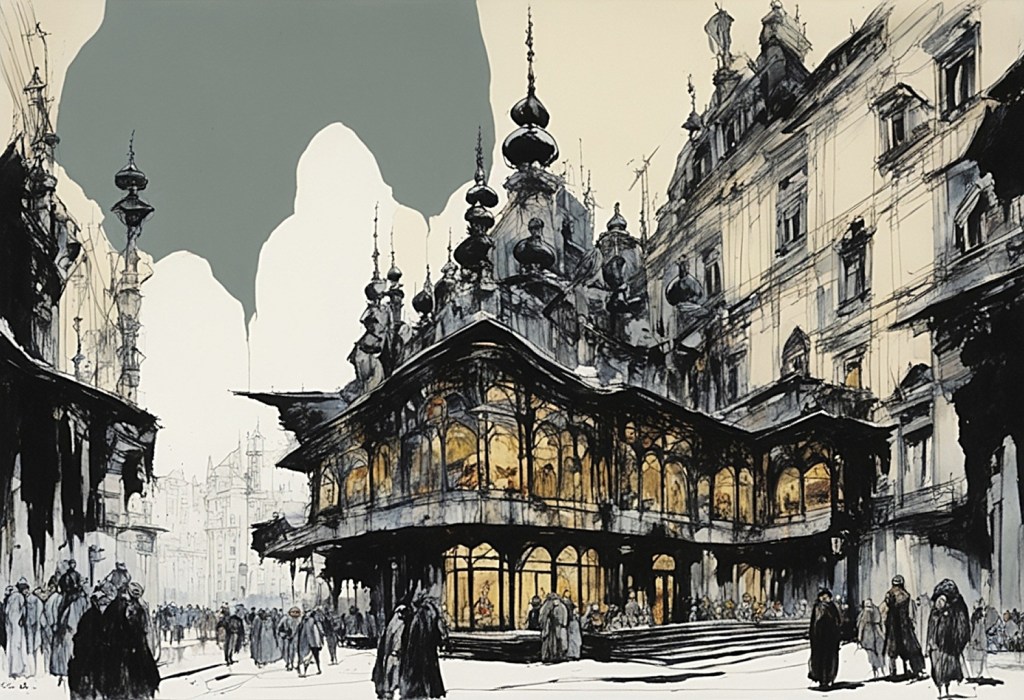
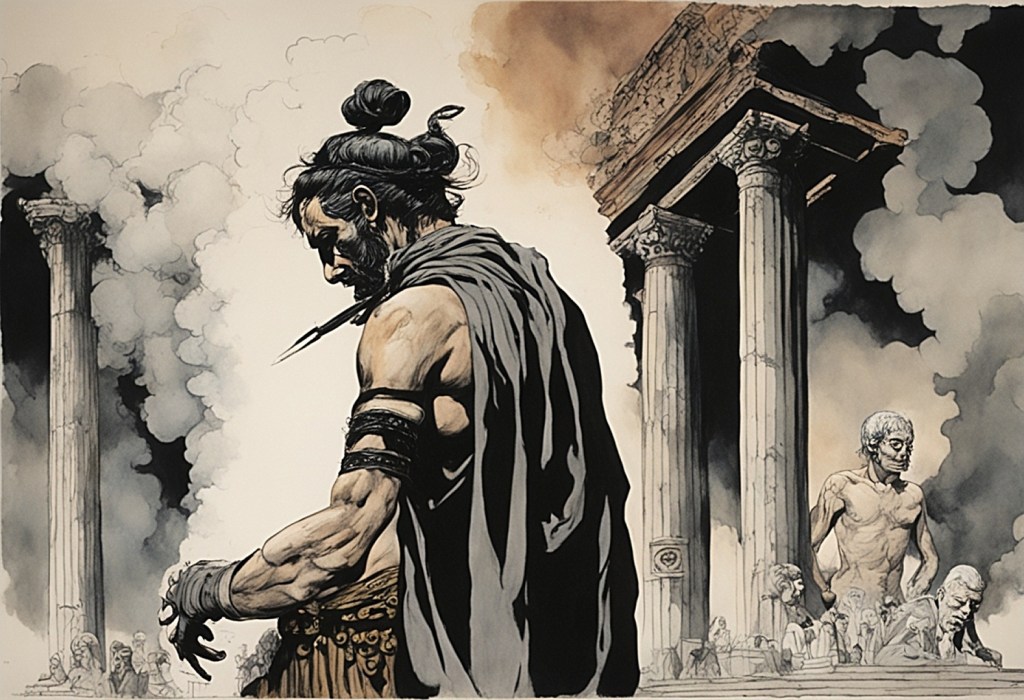
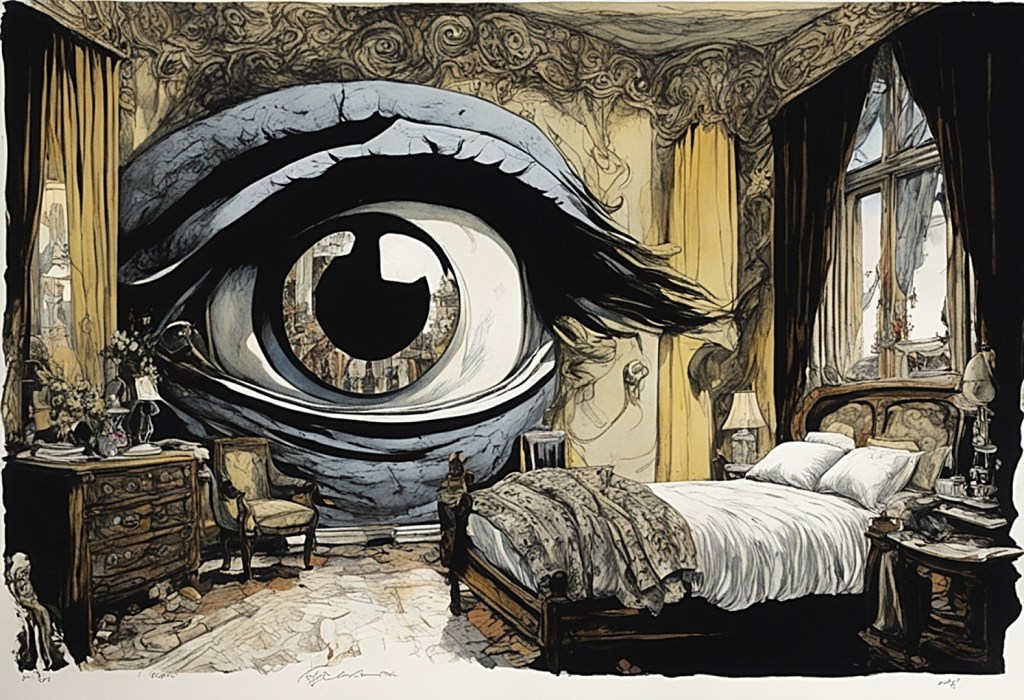
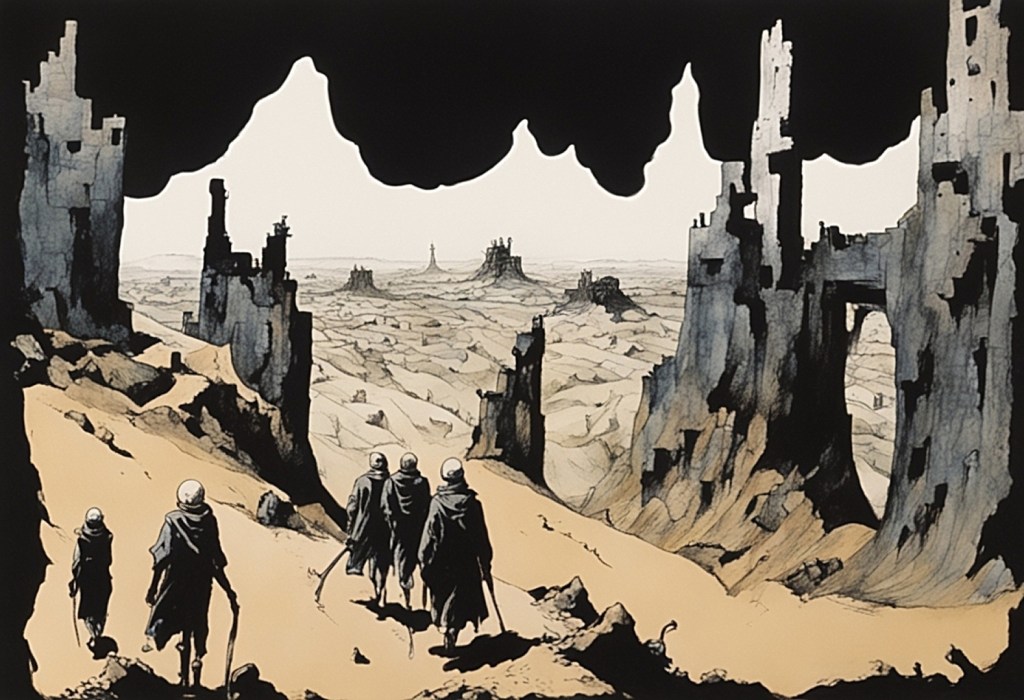
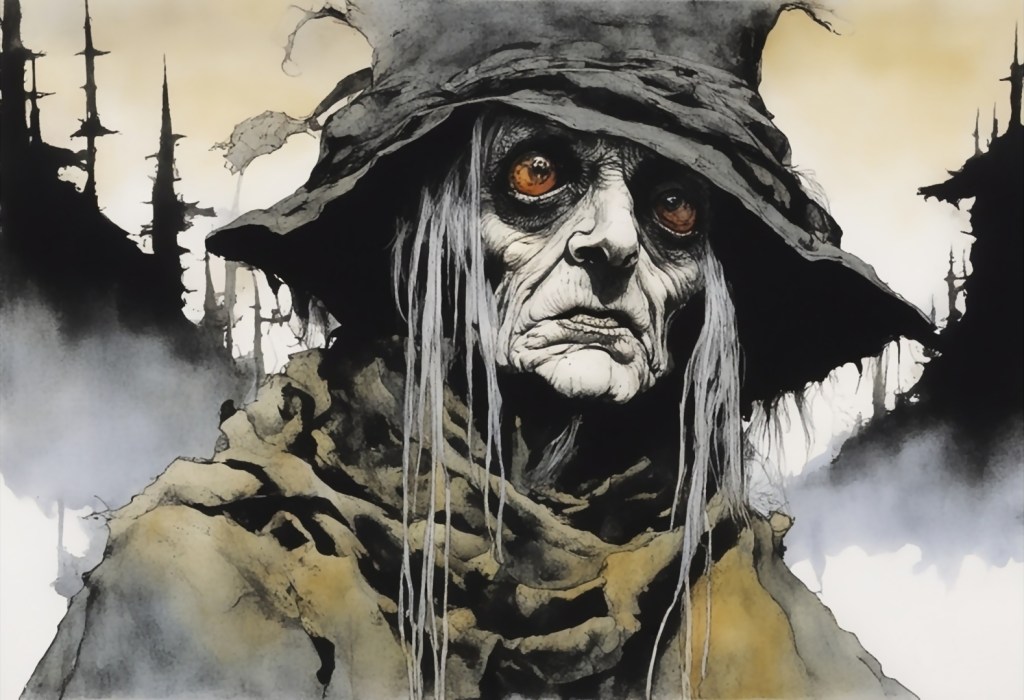
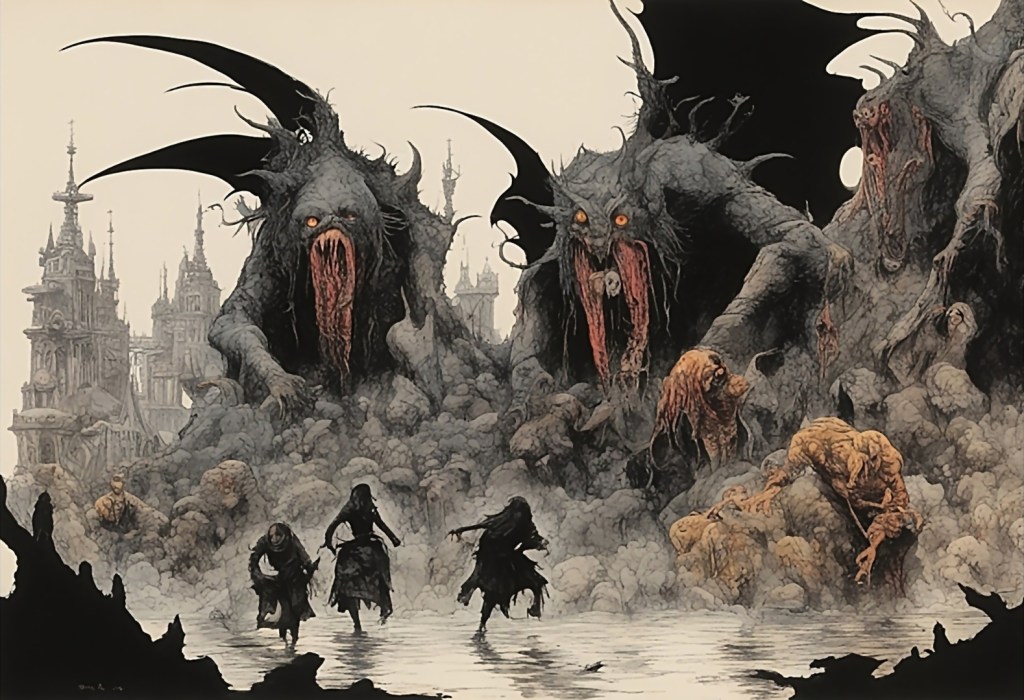
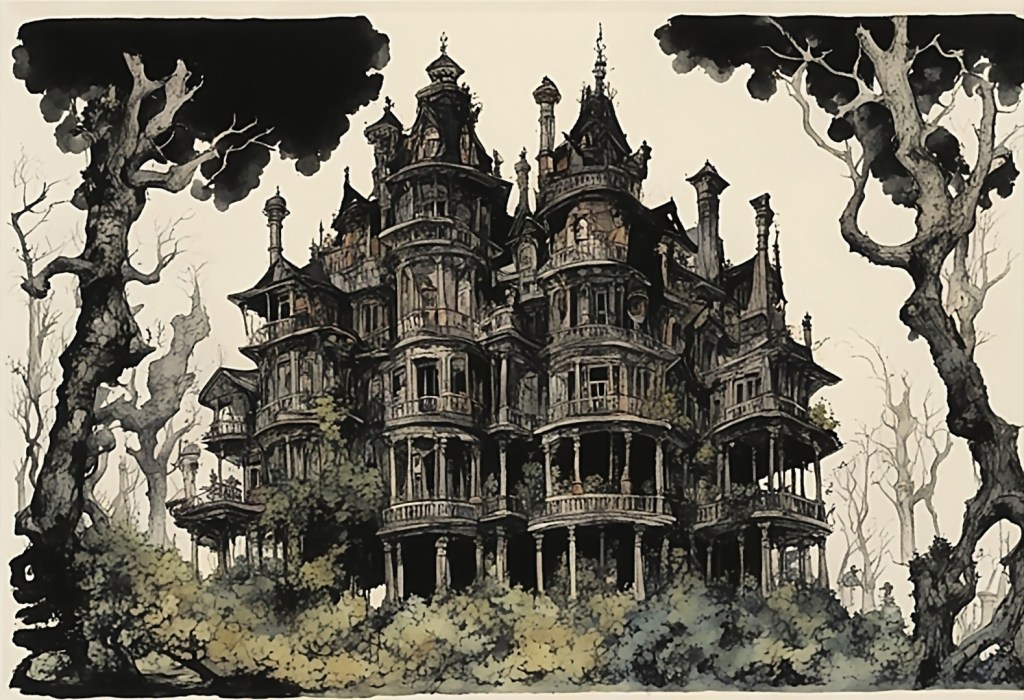
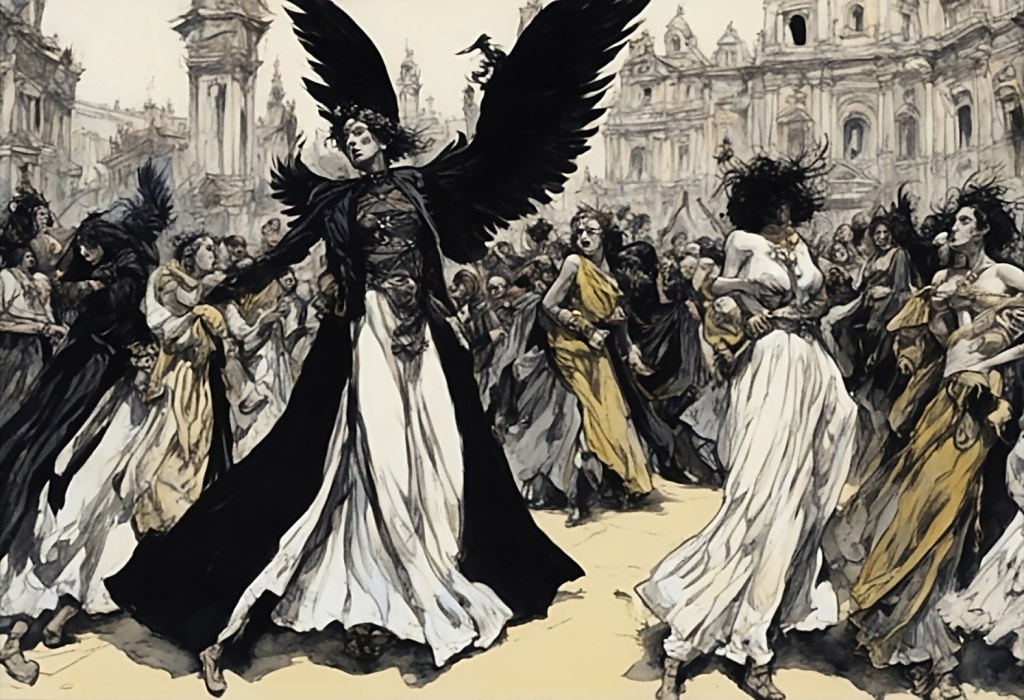
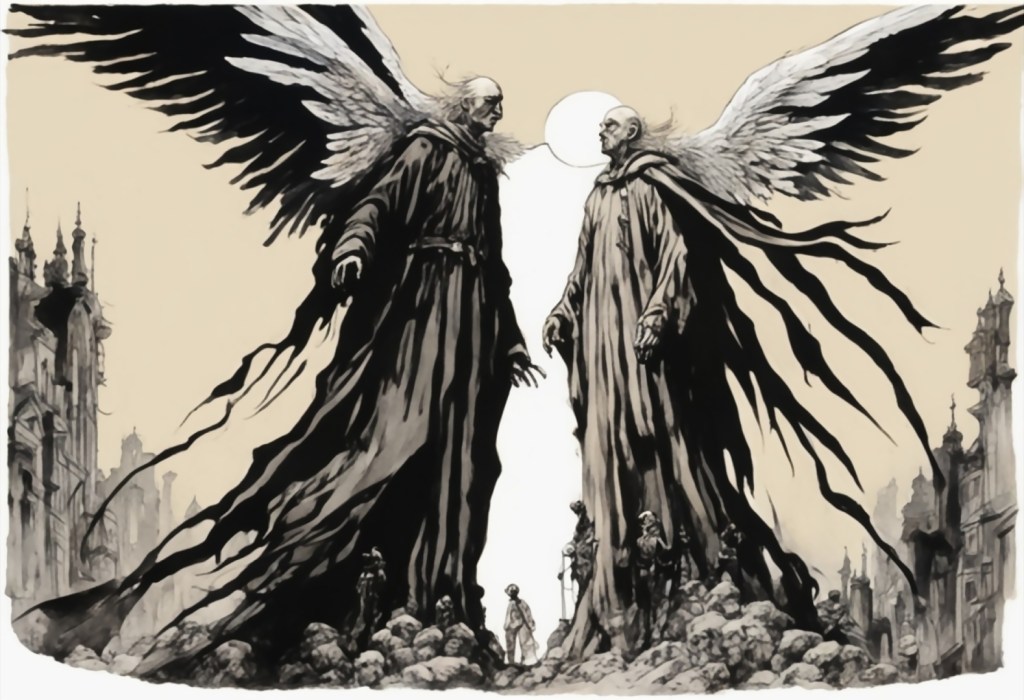
Each of the three soundscapes is divided into six small segments – with lengths varying from one minute up to around four minutes. Each segment is accompanied by an AI generated image depicting a scene from the books.
The segments in parts 2 and 3 correspond to the chapters in those books, and so they are titled accordingly. The first novel was written many years before the latter two, and did not have any chapter structure; I have therefore invented titles for those six images by taking certain phrases from the novel that I felt were appropriate.
The overall work is intended to be appreciated in somewhat the same manner as Mussorgsky’s “Pictures at an Exhibition”. The listener is invited to imagine themselves moving slowly past a gallery of paintings – pausing at each image to listen to a soundscape interpretation of the scene.
Origin of the Music
The music is adapted for synthesisers based upon parts of a work by the piano composer Eric Craven, called “Set Two for Piano”. With his permission, I took three pieces from that work (Numbers. 5, 9, and 11) and treated them as “non-prescriptive” (per Eric’s own unique classification system) ; which is to say, the performer is allowed a great deal of leeway in interpreting the music manuscript:
- Only pitches are given and they may be played at any octave.
- The pitches may be played in any order.
- The pitches may be repeated or omitted.
- The pitches may be grouped in any way and for any purpose, e.g. for the
- formation of chords, ostinati or rhythmic articulation.
- Performances may commence and end at any point in the score.
- The duration of the piece is determined by the performer.
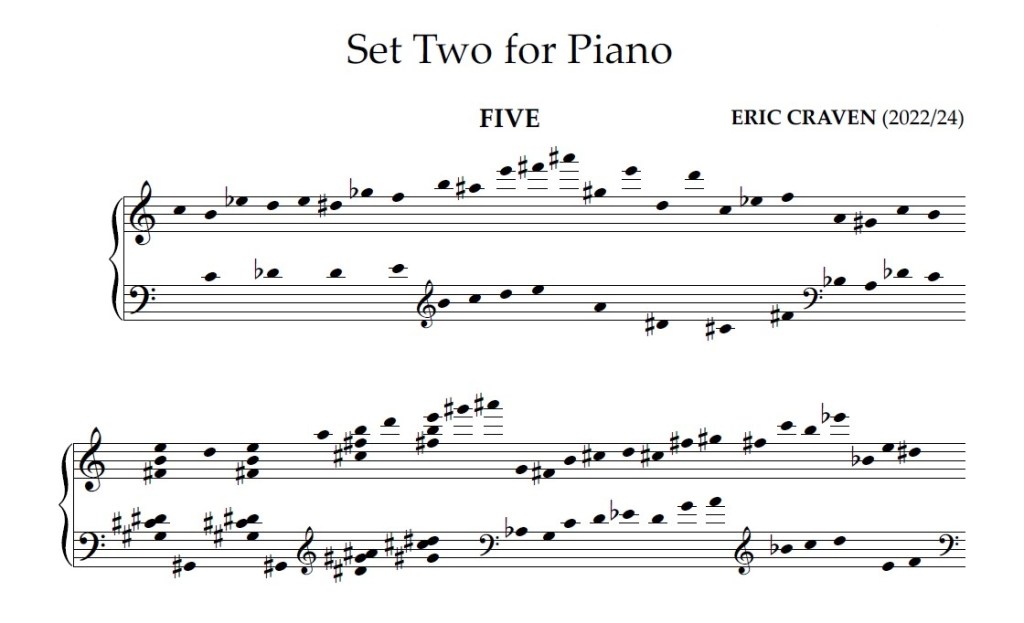
Number 11 was not originally written in “non-prescriptive” form, so I hope Eric will forgive me taking a lot of liberties with it.
The segments of my fantasia present the pitches from Eric’s manuscripts mostly as written in terms of which pitches follow on from which previous ones – sometimes repeating or adding, but omitting nothing. I have tried to present chords in places where the manuscript either appears to (or for Number 11, actually does) indicate them. I do however choose note lengths, octaves, rhythms, dynamics and expression, as well as spreading harmony and timbre across a broad palette of instrumentation. I also occasionally add in a simple arpeggio or ornament. The pieces are adorned throughout with ambient and incidental sound effects.
References and links:
The Human Age Plot Synopsis
https://share.google/aimode/3UPhcEeHH4BlsRYHi
About the Writer
“Wyndham Lewis is what a kind of slightly pathetic, small-minded and envious artist would be like if he were also a genius.” – Will Self 2017
Imperial War Museum video:
https://en.wikipedia.org/wiki/Wyndham_Lewis
https://themontrealreview.com/2009/Wyndham-Lewis-The-Intellectual-As-Artist.php
https://www.thecollector.com/wyndham-lewis-artist-novelist-fascist/
About Eric Craven
Eric is a composer of contemporary avant-garde piano music, and my best friend.
https://divineartrecords.com/composer/eric-craven/
https://ericcravencomposer.wordpress.com/
Origin of the Images
I worked with DeepAI to create the images, adopting a black and coloured ink graphic novel style. For some images, phrases were taken from the book itself to form the initial source for a text prompt. For other images, I resorted to a textual description of imagery formed in my own mind that had been suggested when reading.
Over many hours and hundreds of iterations, I experimented and progressively refined text prompts for the AI to illustrate, until the tool managed to create an image that satisfied my imagination.
Here is a gallery of the images used – feel free to download and use them as you wish:
 Peter Vodden